HOA governing documents shape how a community operates and how residents live together. They set expectations, outline responsibilities, and provide structure for decision-making. If you live in or manage a homeowners association, understanding these documents is essential.
What Are HOA Governing Documents?
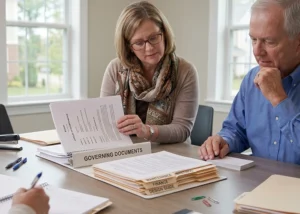
HOA governing documents are the legal framework that defines how a homeowners association operates. They establish the rights and responsibilities of homeowners, the authority of the board, and the rules that keep the community running smoothly.
These documents are not just formal paperwork. They guide daily decisions, from approving home improvements to enforcing community standards. When questions arise, they serve as the primary reference point for resolving disputes or clarifying policies.
For most communities, HOA governing documents are created when the development is first established. Over time, they may be updated to reflect changes in laws, community needs, or board priorities.
The Key Types of HOA Governing Documents
Not all HOA governing documents serve the same purpose. Each one plays a specific role in how the association functions and how rules are applied.
Declaration of Covenants, Conditions, and Restrictions (CC&Rs)
The CC&Rs are often considered the foundation of all HOA governing documents. They are recorded with the county and legally bind all property owners within the community.
These documents outline property use restrictions, maintenance obligations, and the overall authority of the HOA. They may include guidelines on exterior modifications, landscaping standards, and even parking rules.
Because CC&Rs are legally enforceable, they carry significant weight. Any changes typically require a formal amendment process and approval from homeowners.
Bylaws
Bylaws focus on how the HOA is run internally. They define the structure of the board, how meetings are conducted, and how decisions are made.
This includes details such as election procedures, voting requirements, and the roles of board members. While they may not directly impact daily homeowner behavior, they are essential for maintaining fair and consistent governance.
Articles of Incorporation
The Articles of Incorporation establish the HOA as a legal entity. They are filed with the state and provide basic information about the association, including its name, purpose, and structure.
These documents are typically shorter and less detailed than other governing documents. Still, they play a crucial role in defining the HOA’s legal existence.
Rules and Regulations
Rules and regulations expand on the broader guidelines found in the CC&Rs. They address day-to-day issues and help ensure consistency across the community.
These rules may cover topics such as noise levels, pet policies, and the use of common areas. Unlike CC&Rs, they are often easier to update, allowing the board to respond to changing needs.
How HOA Governing Documents Work Together

Each set of HOA governing documents has a distinct purpose, but they are designed to function as a cohesive system. When used correctly, they create a clear hierarchy that helps guide decisions and avoid confusion.
In most cases, the CC&Rs take precedence, followed by the bylaws and then the rules and regulations. If a conflict arises, the document higher in the hierarchy typically prevails.
Understanding this structure can help homeowners and board members navigate complex situations. It also ensures that decisions are made in a way that aligns with the community’s legal framework.
Why HOA Governing Documents Matter
HOA governing documents do more than outline rules. They create a shared understanding of how the community operates and what is expected from everyone involved.
For homeowners, these documents provide clarity and consistency. They help protect property values by ensuring that standards are maintained across the neighborhood.
For board members, they serve as a guide for making fair and informed decisions. Without them, it would be difficult to enforce rules or resolve disputes effectively.
Common Provisions Found in HOA Governing Documents

While each community is unique, many HOA governing documents include similar provisions. These sections address common concerns and help maintain order within the neighborhood.
Property Use Restrictions
Property use restrictions define how homes and lots can be used. This may include guidelines for exterior changes, rental policies, and business activities within the home.
These rules are designed to preserve the overall appearance and character of the community. They also help prevent conflicts between neighbors.
Maintenance Responsibilities
Maintenance provisions clarify who is responsible for different areas of the property. In some communities, the HOA handles common areas while homeowners maintain their own lots.
Clear definitions help avoid misunderstandings and ensure that upkeep is handled consistently.
Assessment and Fees
HOA governing documents outline how assessments are calculated and collected. They also explain what happens if payments are missed.
This section is essential for maintaining the financial health of the association. It ensures that funds are available for maintenance, repairs, and community improvements.
Enforcement Policies
Enforcement provisions explain how rules are applied and what steps are taken when violations occur.
- Warning notices may be issued for minor infractions
- Fines can be applied for repeated violations
- Legal action may be pursued in more serious cases
These policies help maintain fairness and consistency across the community.
How to Read and Understand HOA Governing Documents
HOA governing documents can feel overwhelming at first. They are often written in formal language and may include legal terms that are not immediately clear.
A good approach is to focus on the sections that directly impact your situation. For example, if you are planning a home improvement project, review the guidelines related to architectural changes.
It can also be helpful to take notes or highlight key sections. This makes it easier to reference important details later.
If you are unsure about any part of the documents, consider reaching out to the board or a professional for clarification.
Updating HOA Governing Documents

Over time, communities change. Laws evolve, and new challenges emerge. As a result, HOA governing documents may need to be updated to stay relevant.
Amendments typically require approval from a certain percentage of homeowners. The process can vary depending on the document and the community’s rules.
While updates can take time, they are an important part of maintaining a well-functioning HOA. They ensure that the governing documents continue to meet the needs of the community.
Common Challenges With HOA Governing Documents
Even with clear guidelines, challenges can arise when interpreting or enforcing HOA governing documents.
Some of the most common issues include:
- Outdated provisions that no longer reflect current needs
- Conflicts between different governing documents
- Disagreements among homeowners about rule enforcement
Addressing these challenges requires clear communication and a willingness to work together. In many cases, professional management or legal guidance can help resolve complex situations.
Tips for Board Members Managing HOA Governing Documents

Board members play a key role in ensuring that HOA governing documents are applied fairly and consistently. A thoughtful approach can make a significant difference in how the community functions.
- Stay familiar with all governing documents and updates
- Communicate clearly with homeowners about rules and changes
- Apply policies consistently to avoid confusion or disputes
- Seek professional advice when dealing with complex issues
By following these practices, board members can help create a more transparent and well-managed community.
How Professional HOA Management Can Help
Managing HOA governing documents can be time-consuming, especially for volunteer board members.
HOA governing documents provide the structure that keeps a community organized and fair. When they are understood and applied correctly, they help create a positive living environment for everyone involved.
Looking to simplify your HOA operations and better manage your governing documents? Call us at (614) 300-7050 or contact us online to see how we can bring clarity and confidence to your community.
Related Articles: