Every community has standards, yet some policies still cause friction. This guide explains misunderstood HOA rules in plain language so boards and homeowners can avoid common mistakes. A little clarity prevents conflict and keeps the neighborhood strong.
What Counts as “Misunderstood HOA Rules”?

Some provisions look simple until you read the fine print. Confusion usually comes from definitions, timelines, approvals, or exceptions rather than the purpose of the rule. When CC&Rs, bylaws, and house rules are hard to find or out of sync, misunderstood HOA rules take root.
To steady the ground, make the documents work together. The CC&Rs establish the foundation, the bylaws govern operations, and the rules regulate daily life. When owners can see how these fit, they can follow them with confidence.
HOA Rules that are Typically Misunderstood
In making sure your community’s operations run smoothly, everyone who’s a part of it needs to be on the same page. Here are some of the rules and guidelines in HOAs that are usually misunderstood:
Architectural Changes and Paint Colors
Exterior updates almost always need written approval before work starts. That includes paint, fences, roof materials, lighting, and visible equipment like solar panels or satellite dishes. The sticking points are what counts as a visible change, how long approvals last, and which color codes apply.
To keep projects smooth, start with a comprehensive plan that lists colors, materials, and placement. Then, wait for written approval before ordering or scheduling work. Use the approved palette, note trim and sheen so inspections are easy, and keep the approval letter for future sales or refinances. This steady path reduces disputes and cuts down on misunderstood HOA rules tied to design choices.
Parking and Vehicle Restrictions
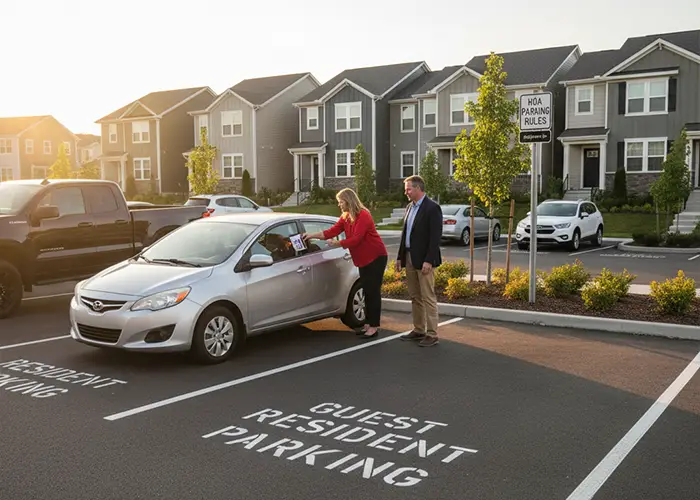
Parking rules appear brief but conceal layers of complexity. Terms such as commercial vehicle, oversized, inoperable, and overnight may be defined in a different section. City rules can also control public streets, while the HOA governs driveways and private lots.
A clearer setup helps everyone find the same answer fast. Define terms inside the rules and on permits, map guest and resident spaces with simple signs, and offer an easy permit or registration step for overflow needs. With the system visible, neighbors rely less on guesswork and more on what is written.
Landscaping, Trees, and Yard Décor
Curb appeal supports property values, yet owners may not know when rock gardens, raised beds, or artificial turf need approval. Trees add another twist when branches cross a boundary or roots lift a sidewalk. Seasonal decorations can also spark debate when dates and sizes are unclear.
Give owners a simple path to yes. Share approved plant lists and turf standards, set clear decoration windows with start and takedown dates, and explain who handles roots, branches, and damage when trees cross property lines. With expectations on paper, neighbors coordinate sooner and conflicts fade.
Rentals and Short-Term Stays

Rental caps and minimum lease terms are common, and some communities ask for tenant registration or a copy of the lease. Short stays can clash with stability goals and insurance rules, so length, frequency, and payment details should be precise.
To keep things orderly, state the minimum lease term in plain English, note any overall cap, and have tenants acknowledge the community rules at move-in. Include parking and amenity access so everyone knows how to use shared spaces. Clarity on these points reduces risk and clarifies misunderstood HOA rules regarding occupancy.
Pets, Service Animals, and Nuisance Clauses
Pet provisions usually cover number, size, waste, leashes, and noise. Requests for assistance animals follow different legal standards and deserve a careful, consistent process. Nuisance is broad, and without examples, it often turns neighbor tension into board disputes.
To set fair lines, define nuisance with everyday scenarios such as repeated barking or unattended waste, then explain how to request an accommodation and when a response is due. Keep dated records of complaints, notices, and resolutions so that the history is clear. When people know the steps, emotions coo,l and outcomes feel fair.
Noise, Quiet Hours, and Common Areas
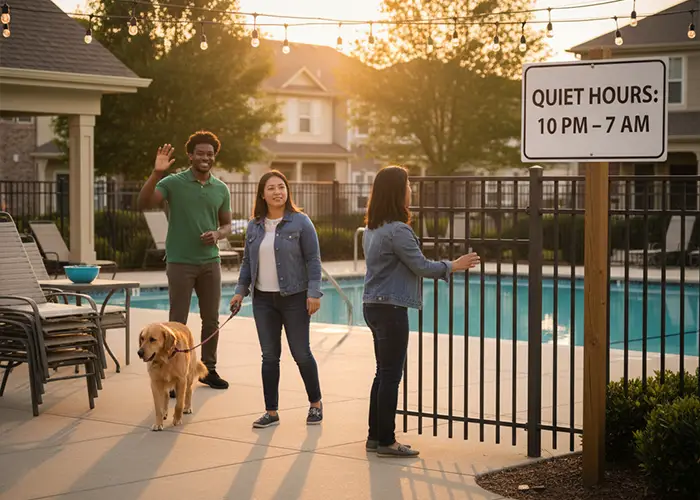
Quiet hours often mirror local codes, but shared walls and busy amenities add extra pressure. Pools, gyms, and clubhouses bring sound, traffic, and parking that can spill into nearby homes. Small issues grow when hours and limits are not posted.
To balance community life with rest, post quiet hours at each amenity and include them in welcome packets for new residents. Add simple event rules with end times and cleanup steps, and allow managers limited discretion for special cases. With predictable guardrails, gatherings stay friendly and complaints drop.
Fines, Hearings, and Due Process
Even strong rules fail without a fair process. Many documents require written notice, time to correct, and a chance to be heard before fines. Skipping steps invites challenges and damages trust.
To keep due process intact, cite the exact rule and observation date in each notice, offer a clear path to a hearing, and record the decision and next steps in plain language. When owners see a fair ladder from notice to cure to hearing, compliance rises and misunderstood HOA rules lose their edge.
Best Practices for HOA Boards

Boards set the tone through clarity and consistency. Short, readable policies work better than dense paragraphs that few people finish. Plain English with examples invites cooperation and sets fair expectations.
To build that culture, publish a one-page new resident guide with the top rules, review policies each year to fix gaps, and standardize notices, cure periods, and hearing scripts. Track violations by category so patterns are easy to spot and policies can improve. Over time, this rhythm trims headaches and reduces misunderstood HOA rules across the board.
Keeping Everyone On the Same Page
Communities thrive when expectations are clear and fair. With simple language, steady processes, and timely communication, misunderstood HOA rules become manageable. Small improvements today prevent bigger conflicts tomorrow.
Looking for professional help in creating and clarifying HOA rules? Nova Management offers HOA management services in Ohio. Call us at (614) 300-7050 or contact us online to learn more!